_1778553121707.webp)
4×8 Mesh Coal Briquette Activated Carbon for Industrial Filtration
2026-07-31 08:58:18
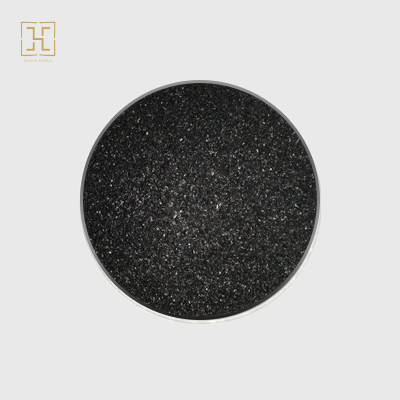
When you need to meet environmental standards and your filter system needs a material that won't break under pressure, 4x8 mesh coal briquette crushing activated carbon is the perfect option. This high-quality medium is made using a special briquetting process. In this process, high-quality bituminous coal powder is mixed with binders and then pressed under a lot of pressure. The mixture is then carbonised and heated with steam before being crushed and carefully screened. The end result is a strong particle size range of 2.36mm to 4.75mm, made for high-flow gas-phase applications that need to keep their structure intact and their adsorption performance consistent.
Introduction
Industrial filtration has hit a turning point where rules are getting stricter and operating efficiency determines who wins in the market. Choosing the right activated carbon isn't just a matter of buying it; it's also an investment in performance and compliance for procurement managers and environmental engineers working with VOC removal systems, liquid recovery units, and industrial exhaust treatment. This guide talks about the real problems that business-to-business buyers have, like how quickly they need to complete emission control projects, how hard it is to meet specific customisation needs, and how there is always tension between price limits and performance standards. We made this resource based on how you make procurement decisions, giving you technical details on why briquette crushing technology solves long-standing problems in the industry, such as dust production, uneven pore distribution, and media breaking down too soon. Whether you're a director of environmental engineering checking the adsorption capacity or a supply chain manager making sure stable delivery pipelines, knowing what makes this filtration medium unique will help your systems work reliably in harsh environments like petrochemical plants, power plants, and factories.
Understanding 4×8 Mesh Coal Briquette Activated Carbon
What Makes Briquette Crushing Different?
It's annoying to work with traditional direct-crushed coal carbon, and this shows up in your downtime and maintenance logs. By joining coal powder before activation, the briquette crushing process completely changes the structure of the material. This creates regular internal hole networks that direct-crush methods can't achieve. This way of making things gets rid of the structural flaws that come with breaking up raw coal. The result is particles that can withstand mechanical stress in packed bed systems without making fine dust that gets stuck in equipment and makes cleaning a pain. The controlled formation process also lets engineers precisely control the ratios of macropores to micropores. This makes the best diffusion pathways for large, volatile organic molecules while keeping microporosity for smaller contaminants.
Mesh Size Impact on System Performance
The 4x8 number means that particles can pass through a 4-mesh screen but stay on an 8-mesh screen, which gives us the 2.36mm to 4.75mm range, and for 4x8 mesh coal briquette crushing activated carbon, this specific particle size is engineered to balance low pressure drop in high-velocity gas streams against sufficient residence time for effective adsorption, while also preventing channelling in vertical beds and maintaining stability during thermal regeneration cycles. Concerns about pressure drop in high-speed airflow systems are directly addressed by this larger granule specification. When waste streams move through adsorption beds at industrial flow rates, smaller particles cause resistance. This makes the fan work harder and costs more to run. The 4x8 size is just the right size—it's big enough to keep pressure drop and energy use to a minimum, but small enough to give the adsorption process enough contact time. This specification stops channelling in vertical bed configurations and keeps the bed stable during thermal regeneration cycles, which your engineering team will like.
Critical Technical Properties
The performance rating is based on measurable criteria that show how reliable something is in the real world. Iodine values between 900 and 1100 mg/g show the total surface area that can be used for adsorption. Carbon tetrachloride (CTC) values between 50 and 70% measure gas-phase adsorption capacity, which is the most important factor for VOC control. According to ASTM D3802 standards, a hardness of more than 95% means that the material won't wear down easily during handling, air transfer, and regeneration. Bulk density, which is usually between 450 and 550 g/L, affects how much space is needed for the bed and how much weight is needed for the structure of the tank. These numbers are not made up; they are the breaking points between materials that can last for years and ones that need to be replaced too soon. The pH ranges from neutral to slightly alkaline, which means it can be mixed with most industrial gas streams without causing corrosion. The ash content of less than 12% also keeps recovered solvents or treated streams from getting dirty.
Benefits and Industrial Applications
Performance Advantages in Demanding Environments
The way for breaking briquettes gives you real practical benefits that have an effect on your bottom line and your compliance reporting. Mechanical strength directly leads to less fines production, which protects equipment further downstream from damage caused by particles and stops the slow rise in pressure that happens when the bed breaks down. The engineered pore structure of 4x8 mesh coal briquette crushing activated carbon speeds up the adsorption process, which means that contact times are shorter or throughput is higher in existing vessels. This is very important when updating systems to meet new emission limits without having to buy new equipment. Thermal reactivation makes media last longer by allowing for multiple regeneration cycles. This lowers the total cost of ownership compared to single-use options. This economic benefit is especially important for setups with a lot of media, since replacing media costs a lot of money and takes time away from the system.
Where This Material Excels?
This material's properties work perfectly with the needs of industrial VOC removal systems, which is where it is mostly used. Chemical factories that use process waste to get back toluene, xylene, and methyl ethyl ketone depend on the material's high CTC value and ability to keep its shape through repeated temperature swing cycles. It is used by petrochemical companies in vapour recovery units to catch hydrocarbon streams before they are thermally oxidised. They value its resistance to degradation caused by hydrocarbons and its ability to withstand renewal temperatures. In addition to chemical processing, this grade is chosen by makers of industrial gas masks and breathing protection canisters because it has reliable breakout properties and an expected service life under toxicology exposure circumstances. It is used in liquid recovery systems in the pharmaceutical business so that carbon fines and other impurities that can leak out don't change the quality of the materials that are recovered. It is used in mercury control systems at power plants because the macropore structure makes it easier for mercury vapour to move to active binding sites.
Each application proves a basic idea: when system designers need reliable performance in tough situations like high temperatures, corrosive environments, cyclic loading, or long service intervals, briquette crushing technology's engineered consistency delivers what direct-crushed alternatives can't, and 4x8 mesh coal briquette crushing activated carbonexemplifies this reliability with its uniform particle size, high hardness, and stable adsorption performance that withstands challenging operating conditions while maintaining low fines generation and consistent contaminant removal.
Manufacturing Process and Quality Assurance
From Raw Material to Finished Product
The first step in production is choosing the right bituminous coal. The quality of the fuel decides the capacity of the end product. Once the material has been ground into a fine powder, it is mixed with specific binders in the right amounts. Next, it is compressed under high pressure to make dense, even blocks. In controlled-atmosphere furnaces, the carbonisation step gets rid of flammable parts and creates the first carbon structure. Then, at temperatures above 800°C, steam activation takes place. This is when water vapour reacts with carbon to make the large network of pores. The physical work is finished by crushing the active briquettes and screening them to a 4x8 mesh size. This multi-step process lets quality control happen at every step, finding problems early on before they become problems with the whole output.
Quality Control Testing Protocols
Consistency between batches depends on strict testing schedules that check performance factors. The iodine number test measures the total surface area and the number of micropores. This directly relates to the ability of the material to hold smaller molecules. CTC testing specifically checks the performance of the gas phase, which is very important for air treatment uses. ASTM-required hardness testing predicts how well something will fight wear and tear and how much fines will be made during handling and use. Moisture content analysis makes sure that products stay stable on the shelf and stops their activity from fading too quickly. Finding out the ash level finds chemical leftovers that might be good for binding. Measurement of bulk density confirms consistency in particle size and packing properties. These aren't just routine checks; they're the data points that make sure each output lot meets the requirements before it's released.
Certifications That Matter
The way for breaking briquettes gives you real practical benefits that have an effect on your bottom line and your compliance reporting. Mechanical strength directly leads to less fines production, which protects equipment further downstream from damage caused by particles and stops the slow rise in pressure that happens when the bed breaks down. The engineered pore structure of 4x8 mesh coal briquette crushing activated carbon speeds up the adsorption process, which means that contact times are shorter or throughput is higher in existing vessels. This is very important when updating systems to meet new emission limits without having to buy new equipment. Thermal reactivation makes media last longer by allowing for multiple regeneration cycles. This lowers the total cost of ownership compared to single-use options. This economic benefit is especially important for setups with a lot of media, since replacing media costs a lot of money and takes time away from the system.
Comparing 4×8 Mesh Coal Briquette Activated Carbon with Other Types
Briquette Crushing vs. Direct Crushing
The main difference in manufacturing has effects on performance that build on top of each other. The particles in direct-crushed coal carbon aren't all the same shape, and the pore structure changes in unpredictable ways. This makes the adsorption behaviour different between production runs. The binding process in briquette breaking makes the material more uniform before it is activated. This makes it easier to build systems and predict how well they will work. Directly crushed materials make dust that can be annoying to work with and could be harmful to your health. Briquette-crushed particles, on the other hand, are harder and make friable fines less likely to happen. When looking at lifecycle costs, the ability to regenerate briquettes and their longer service life usually make up for the small increase in the cost of the materials at the start.
Mesh Size Selection Considerations
When you look at 4x8 mesh next to smaller sizes like 8x30 mesh, you can see the trade-offs that come with particle sizing. The smaller 8-30 nm particles have more surface area per unit volume, which could speed up the initial adsorption process in situations where contact time is very short. This is a benefit, but it comes at a cost: more pressure drop, more energy use for airflow, and a higher chance of channelling in deep beds. The 4x8 specification puts an emphasis on flow characteristics and minimising pressure drop. This makes it suitable for high-throughput systems that value long-term stability and energy efficiency over small improvements in kinetic performance.
Coal vs. Alternative Feedstocks
Coconut shell activated carbon has very high hardness and micropore dominance, making it perfect for liquid-phase uses that need to remove very small molecules. In some situations, wood-based carbons are cheaper, but they usually have less mechanical strength. 4x8 mesh coal briquette crushing activated carbon is a great performer that can do a lot of different things well. It has the right amount of microporosity for adsorption of small molecules and the right amount of engineered macroporosity for diffusion of large molecules, and it still has the right mechanical properties for industrial gas-phase service. The choice depends on the needs of the application: coconut shell is best for high-quality liquids that need the highest level of hardness, coal briquette crushing is best for controlling VOCs in gaseous forms that need balanced performance and regeneration ability, and wood-based is best for low-cost applications with less strict mechanical needs.
Procurement Guide for 4×8 Mesh Coal Briquette Activated Carbon
Supplier Evaluation Criteria
Understanding Cost Structures
Prices depend on more than just the cost of raw materials. Order number has a big effect on unit prices; buying in bulk gets you better rates and makes it worth it to combine your goods. Lead times are different depending on whether you're buying stock specs or activation factors that are unique to your order. Standard 4x8 mesh coal briquette crushing activated carbon usually ships within 7–15 days from existing stock, but it could take up to 15–30 days for performance changes or special activation. Rush orders usually cost more, but they can cut arrival time down to three days when deadlines are coming up. When you ship goods internationally, you have to deal with freight handling, customs clearance, and paperwork requirements that are harder for new sellers to handle than for experienced ones. Knowing the full landed cost instead of just the FOB price keeps budget surprises at bay and lets you accurately estimate how much a project will cost.
Storage and Handling Best Practices
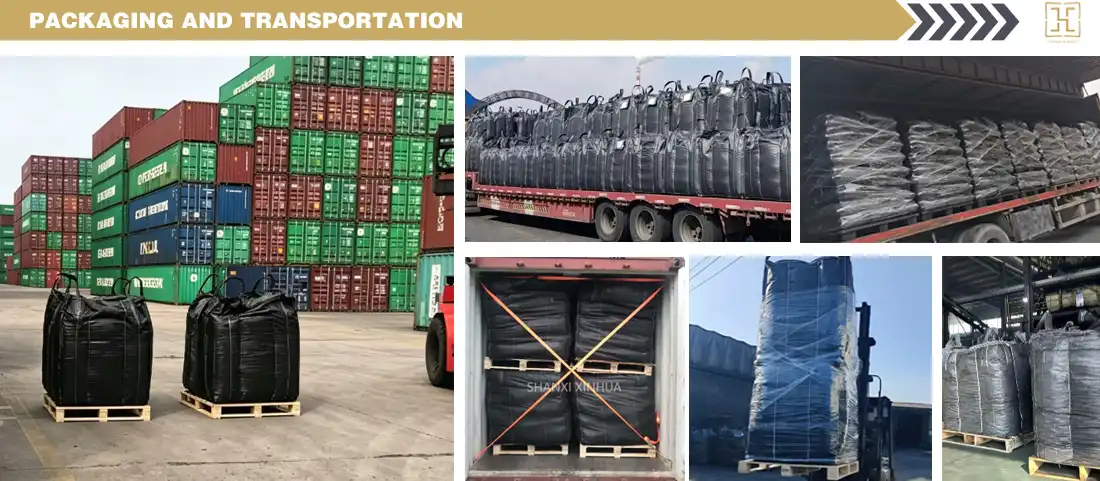
When activated carbon is exposed to water, oxidising agents, or high temperatures before it is used, its effectiveness decreases. Keep containers that are tightly sealed in cool, dry places that are out of direct sunlight and that could get wet. When stored properly, unopened packaging can keep a product's quality for three to five years. Once containers are opened, keep them out of the air as much as possible and seal them well again between uses. Controlling speeds during pneumatic transfer into adsorption vessels will stop particles from breaking down and fines from forming. To avoid thermal events, pre-wetting protocols for some uses should be done according to what the manufacturer says. Handling the material correctly will protect your investment and make sure it works as expected when it's put to use.
Conclusion
The choice of filter media has effects that last long after the order is delivered. It's important to know the designed benefits of 4x8 mesh coal briquette crushing activated carbon when environmental compliance, working efficiency, and lifetime costs all come together in your choice matrix. The structural integrity, optimised pore architecture, and regeneration ability of this material all work together to solve the problems that procurement professionals face in high-stakes industrial applications. You can make buying choices that support both short-term project success and long-term operating stability if you know about manufacturing processes, performance comparisons, and seller evaluation criteria. Tougher rules and higher performance standards are changing the industrial filtration landscape. This is making supplier partnerships with deep technical knowledge and production capacity more valuable as strategic assets.
FAQ
How long does this activated carbon last in industrial applications?
How long something works depends a lot on how often it regenerates and how much contamination it gets. In VOC control systems that use thermal regeneration, properly handled material can go through 10 to 15 regeneration cycles before the buildup of ash and structural damage makes it necessary to replace it. In single-pass applications that don't regenerate, the lifespan is determined by how much contamination gets through. Depending on concentration and flow rates, this can be anywhere from a few months to over a year.
Can this material be regenerated, and what methods work best?
This grade is perfect for thermal recovery because it is very dense and hard. Organic substances that are flammable and have low boiling points can be regenerated by steam at 120 to 150°C. Higher-temperature thermal regeneration at 400–900°C in controlled-atmosphere furnaces removes less volatile contaminants effectively and partially restores the ability to adsorb. For solvent recovery tasks, vacuum regeneration is a more energy-efficient option because it uses lower pressure to pull adsorbed materials off the carbon surface instead of high temperature.
What factors determine whether 4×8 mesh is the right choice for my application?
It is better to use the 4x8 standard for gas-phase uses with high flow rates and sensitivity to pressure drop. When the packed bed depth is more than one metre, the structure stability and flow properties of bigger pieces help. Systems made for thermal recovery use the strength of materials that can handle being heated over and over again. On the other hand, uses that need very fast adsorption rates or that are severely limited in room might benefit from smaller mesh specs, even though they cause more pressure drop.
Partner with Shanxi Xinhua Carbon Technology Industry Co., Ltd. for Your Activated Carbon Needs
To find high-performance 4x8 mesh coal briquette crushing activated carbon, you need a seller with scientific know-how, a large production scale, and quick customer service. Shanxi Xinhua Carbon Technology Industry Co., Ltd. has been working in material science for more than 60 years. Their background is in defense-grade chemical protection technology, which they now use in industrial filters. Our work with Tsinghua University, Central South University, and the Chinese Academy of Sciences leads to new ideas in creating pore structures and making changes to catalysts all the time. We keep a full stock of all the major activated carbon specifications because we have production facilities in Shanxi, Ningxia, Fujian, and Xinjiang that can make 45,000 tonnes of carbon every year. Our ISO 9001, ISO 14001, and ISO 45001 certifications show that we manage quality and the environment in a systematic way. Our technical team also helps with system optimisation and regeneration protocols that are specific to each application. Standard orders take between 7 and 15 days, but you can get faster service in just three days if you need to finish a job quickly. Environmental engineering companies, manufacturing sites, local water systems, and industrial air cleaning developers looking for a reliable activated carbon provider that can meet both current needs and new material development are welcome to get in touch with us. Contact our team at greta@carbonxinhua.com to discuss your filtration challenges, request technical data sheets, or arrange sample testing. Visit xhcarbontech.com to explore our complete product range and discover how our engineering support can optimize your adsorption system performance.
References
1. Activated Carbon: Solutions for Improving Water Quality, American Water Works Association Research Foundation, 2011.
2. Bansal, Roop Chand, and Meenakshi Goyal. Activated Carbon Adsorption. CRC Press, 2005.
3. Cheremisinoff, Nicholas P., and Paul N. Cheremisinoff. Carbon Adsorption for Pollution Control. Prentice Hall, 1993.
4. Marsh, Harry, and Francisco Rodríguez-Reinoso. Activated Carbon. Elsevier Science, 2006.
5. Meldrum, Ian G. Industrial Gas Cleaning: Activated Carbon Solutions for VOC Control. Institution of Chemical Engineers, 1998.
6. Activated Carbon in Industrial Water Treatment: Applications and Performance Considerations, Water Environment Federation Technical Practice Committee, 2017.

Send Inquiry
You may like
Related Industry Knowledge
_1781662034490.webp)