_1778553121707.webp)
8*30 Mesh Coal Briquette Crushing Activated Carbon Optimizes Industrial Purification
2026-08-03 00:00:00
When industrial facilities face mounting pressure to meet stringent emission standards while controlling operational costs, the choice of adsorption media becomes critical. 8*30-mesh coal briquette crushing activated carbon delivers a practical solution through its engineered particle size distribution—ranging from 0.6mm to 2.36mm—that balances superior adsorption capacity with minimal pressure drop across filtration systems. This granular material undergoes a specialized manufacturing process where high-grade bituminous coal is pulverized, blended with precise binders, compressed under extreme pressure, carbonized, and steam-activated before controlled crushing. The result addresses persistent industry challenges: inconsistent pore structures, excessive dust generation, and premature media exhaustion that plague lower-grade alternatives.
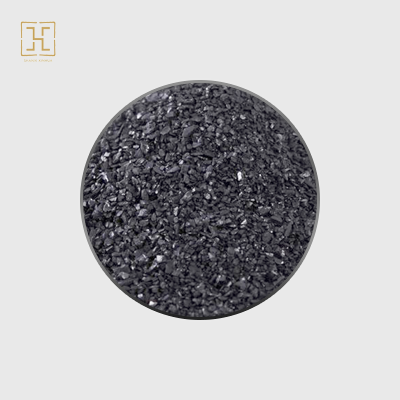
Understanding the Engineering Behind 8*30 Mesh Coal Briquette Activated Carbon
What Makes This Particle Size Specification Critical
The 830-mesh designation means more than just a random size. This range strikes the best balance between ease of access from the surface and hydraulic efficiency. When environmental engineers choose adsorption media, they need to think about how the size of the particles affects both the amount of time they spend in contact with pollutants and the backpressure in the system. Larger mesh sizes, like 48, lower flow resistance but lose surface area per unit volume. Smaller gradations, like 12*40 mesh, raise contact efficiency but may cause too much pressure to build up in deep-bed designs.
Our production teams at Shanxi Xinhua follow strict screening rules to make sure that particles are spread out evenly. This evenness stops channeling, which is when fluids skip over parts of the 8*30-mesh coal briquette crushing activated carbon bed by taking the paths with the least resistance. This makes the best use of the whole media volume.
The Briquette Manufacturing Advantage
Traditional direct-crushed coal carbon often has structural limitations caused by variations in raw material composition and inconsistent pore development. The briquette manufacturing method used for 8*30-mesh coal briquette crushing activated carbon fundamentally improves the carbon matrix structure. After selected anthracite coal is ground into a fine powder, specialized binders are added, and high compression forces are applied to create a dense and stable carbon framework. This advanced process allows 8*30-mesh coal briquette crushing activated carbon to develop a dual-pore structure consisting of macropores and mesopores, which facilitates rapid molecular diffusion toward adsorption sites within micropores where contaminants are effectively captured. Compared with conventional carbon materials, 8*30-mesh coal briquette crushing activated carbon provides more uniform pore distribution, stronger mechanical strength, and improved adsorption efficiency. The optimized structure of 8*30-mesh coal briquette crushing activated carbon makes it suitable for applications requiring reliable contaminant removal, stable filtration performance, and long-lasting purification results. By combining controlled production techniques with enhanced pore architecture, 8*30-mesh coal briquette crushing activated carbon delivers consistent quality for demanding industrial and environmental treatment systems.
This benefit can be seen in the technical details. The normal range for iodine values, which are an estimate for micropore surface area, is between 900 and 1100 mg/g. According to ASTM D3802 tests, this range keeps the mechanical hardness between 90 and 97%. Low ash content, usually less than 15%, makes sure that adsorption chemistry isn't messed up too much and stops unwanted catalytic side reactions in sensitive situations.
Performance Across Industrial Applications
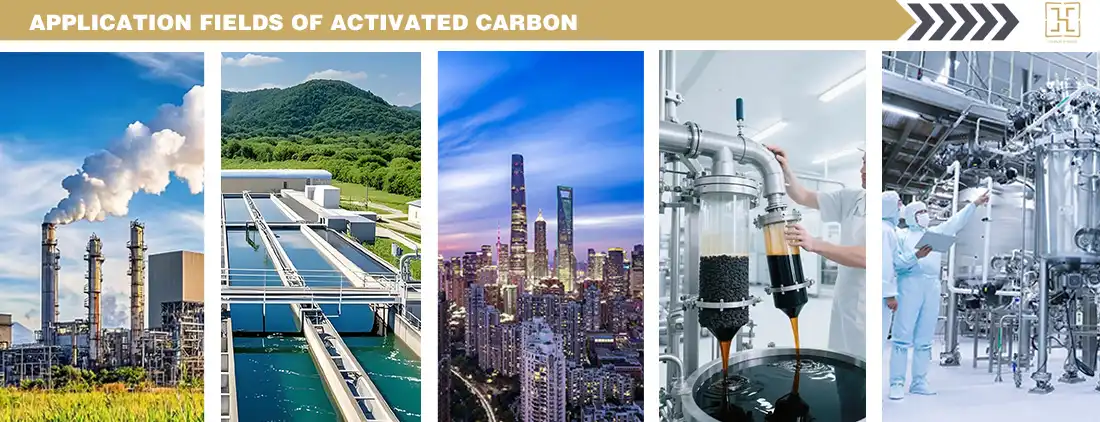
The 8*30-mesh format meets the requirements of both AWWA B604 and NSF/ANSI Standard 61, which is good for water treatment plants that deal with municipal or industrial wastewater. The particle size stops too many fines from getting into the treated water while still getting rid of chlorine, organic micropollutants, and taste and odor compounds.
Adsorbents that work consistently in high temperatures and changing humidity are needed in VOCs treatment systems in finishing facilities, electronics factories, and chemical processing plants. Because the briquetted structure is thermally stable, it can be regenerated many times without losing much of its effectiveness. This makes the total cost of ownership much lower than with single-use options.
Best Methods to Crush and Handle Coal Briquette Activated Carbon
Selecting Appropriate Crushing Equipment
To make activated carbon briquettes that meet the 8*30-mesh standard, you need tools that can precisely control the size while generating as little dust as possible. There are three main types of crushers used in large businesses:
Jaw crushers offer strong initial reduction for big briquette feedstock. They can handle rough materials with little upkeep. They do, however, make particle sizes that are more spread out, which means they need to be screened again.
Hammer mills can make sizes that are more rigid with high-speed impact forces. Their screen holes can be changed so that workers can change the output gradation to meet the needs of each customer. The trade-off is that more fines are made and more energy is used if the working settings aren't set correctly.
Roller crushers are great at making particles with controlled aspect ratios and uniform shapes. Their compression-based mechanism makes less dust than impact methods, which protects the air quality in the workplace and cuts down on product loss.
We use integrated crushing lines that combine these technologies at our factories in Shanxi, Ningxia, Fujian, and Xinjiang. First, the briquettes are crushed by jaws. Then, they are fine-tuned with rollers and screened with rotating deck separators that get rid of both the too-large and too-small pieces.
Optimizing Process Parameters for Quality
Because it is porous and brittle, 8*30-mesh coal briquette crushing activated carbon is hard to crush in standard ways. When there is too much mechanical force, dust fines are made, which are waste and could be harmful to your health. Particles that don't pack well in filtration columns are made when there isn't enough force.
Working together with Tsinghua University and the Shanxi Institute of Coal Chemistry of the Chinese Academy of Sciences, we've improved the way we crush coal. Some important process rules are:
- Feed rate modulation: Keeping the flow of material steady stops the crusher from being overloaded and breaking up particles unevenly.
- Changes in moisture content: A small amount of water (about 2% to 3% of the dry weight) stops dust from forming without affecting the binding performance.
- Screen mesh inspection: Screening media should be maintained regularly to make sure accurate size separation.
These steps protect the designed pore structure of the material. Testing shows that crushed carbon keeps more than 95% of its original iodine value and mechanical strength. This proves that controlled breaking doesn't affect the carbon's ability to absorb things.
Storage and Handling Best Practices
When properly crushed, activated carbon has an indefinite shelf life as long as the right conditions are met. Keeping things in storage should keep moisture out, which can make adsorption sites too saturated too soon, and volatile organic chemicals out so they don't get on the carbon surface.
Systems that move large amounts of stuff must take into account the electrical properties and dust potential of carbon. For long-term storage, we suggest pneumatic conveying systems that are properly grounded, sealed transfer points that catch dust, and packing that doesn't get wet. When things are kept for more than five years, they should be tested again to make sure they are still active before they are used in important uses.
Comparative Analysis: Mesh Sizes and Carbon Types
8*30 Mesh Versus Coarser Gradations
When purchasing managers compare 48 mesh carbon (about 2.36mm to 4.75mm) to 8*30 mesh standards, they have to think about the goals that are most important for each application. In gas-phase applications, where low pressure drop across deep beds is very important, the coarser 4*8 format works best. This is especially true in high-volume air purification systems that treat industrial exhaust streams.
The 830-mesh range is better for water treatment, though. Smaller particles have more surface area on the outside compared to the volume of the bed, which makes it easier for them to contact dissolved contaminants. Due to better fluidization, backwashing cycles clean 830-mesh coal briquette crushing activated carbon beds more effectively, which means that media doesn't have to be replaced as often.
A lot of thought goes into cost issues as well. On a per-kilogram basis, 48 mesh seems like a good deal, but the 830-mesh specification usually has lower cost-per-contaminant-removed because it is more efficient. When wastewater treatment plants deal with complex organic loads, 8*30-mesh media often has 20–30% longer breakthrough times than coarser options.
Coal Briquette Versus Wood-Based Activated Carbon
Activated carbons made from wood are best for some uses because they have a microporous structure that is great at catching small molecules like chloroform and other trihalomethanes in drinking water treatment. However, briquette carbon made from coal has clear benefits for industrial cleaning situations.
The mesopore network in briquette carbon makes it easier for larger organic molecules to stick to it. These include industrial solvents, petrochemical intermediates, and biological contaminants that don't diffuse well into the micropores of wood carbon. Coal carbon is stronger than wood-based media, so it can handle the hydraulic pressures in large-scale fixed-bed reactors that would break wood-based media.
The power to regenerate heat is another important factor. Because it is made up of crystals, coal briquette carbon can handle being reactivated many times at high temperatures. After fewer attempts to regenerate, wood carbons tend to lose their structural integrity, which raises the cost of replacement and the number of times it needs to be done.
Procuring Quality Activated Carbon and Crushing Solutions
Identifying Certified Manufacturers
Reliability in the supply line starts with checking the suppliers. Manufacturers with a good reputation keep their ISO 9001 quality management, ISO 14001 environmental management, and ISO 45001 occupational health certifications up to date. These are basic standards that make sure production methods are uniform, and products can be tracked back to their source.
Check out a manufacturer's expert skills in addition to basic licenses. Do they have testing labs in-house that are run by trained analytical chemists? Can they give you records of analysis that are specific to each batch and show the iodine value, ash content, perceived density, and particle size distribution? For example, ASTM D4607 for carbon tetrachloride activity or ASTM D2854 for perceived density should be used as references in material data sheets for 8*30-mesh coal briquette crushing activated carbon.
Intellectual property portfolios give you more information about the technical depth. Companies that have patents on carbon modification, catalyst loading, or specialized activation processes show that they are still investing in research and development. Through partnerships with Central South University and Taiyuan University of Technology, our team has created a number of invention patents that turn academic study into new ways to make things.
Understanding Pricing and Lead Times
The wholesale price of 8*30-mesh coal briquette carbon changes based on the cost of raw materials, the amount of orders, and how full the production capacity is. For big environmental projects, buying in tons usually gets better unit prices than buying in smaller amounts. Setting up framework supply deals keeps prices stable across fiscal periods and makes sure that production is allocated first during times of high demand.
For items that are kept in stock in our production base inventories, standard lead times are 7 to 15 days. Custom specs, like acid-washed low-ash versions, carbons coated with certain catalysts, or different mesh ranges, need 15 to 30 days to be made and quality checked. Our green channel service speeds up the buying process in emergency scenarios, getting important supplies to people within 72 hours when project deadlines require it.
Equipment Investment Considerations
Facilities that want to do their own crushing must compare the prices of capital tools to the costs of outsourcing. Industrial crushing systems that can handle throughputs of several tons per day are usually very expensive, ranging from $50,000 to $200,000 depending on how automated they are and how much they can handle.
If you're thinking about costs other than the purchase price, you should also think about operating costs, such as energy use, repair parts inventory, user training, and environmental controls for dust management. It is often more cost-effective for smaller businesses to buy pre-crushed and screened material from specialized producers who can take advantage of economies of scale by making more of it.
Enhancing Industrial Purification Through Optimized Carbon Technology
Crushing Quality's Impact on System Performance
There is more to the relationship between particle uniformity and purification efficiency than just looking at surface area. When beds are packed with 8*30-mesh coal briquette crushing activated carbon that is all the same size, the hydraulic properties are reliable. This lets engineers correctly model how flow is distributed and how breakthroughs happen. This predictability leads to better system design, lower safety gaps, and the best use of capital for vessel size.
There are several ways that operational cost savings show up. When compared to poorly graded media, uniform particle beds reduce the amount of variation in the pressure drop, which means that 10-15% less pumping energy is needed. Less fines production means that upstream protection systems don't have to replace pre-filters as often. Longer service cycles between change-outs cut down on the time and money needed for work that is needed for media replacement processes.
Performance Validation Through Industrial Case Studies
A chemical company in the Midwest used 8*30-mesh coal briquette crushing activated carbon in a fixed-bed adsorption system to clean up VOC-filled process fumes. During its 18-month run, the installation managed to remove 98.5% of mixed solvent streams while keeping the pressure drop below 2 inches of water column, well within the limits set by air permit criteria. After saturation, thermal regeneration brought back 92% of the original capacity, which meant that the media could be used three times before it became more cost-effective to replace it.
Similar benefits can be seen in municipal water cleaning uses. To fix taste and smell problems that happen every so often, a 20-MGD drinking water plant in the Southeast switched from granular activated carbon to 8*30-mesh briquette carbon. The better particle size distribution cut down on backwashing by 25% and increased the time it took for geosmin and 2-methylisoborneol to break through, which are the chemicals that give foods their natural flavors. These breakthrough times went from 45 to 62 days on average.
Emerging Developments in Carbon Technology
Improvements in activation chemistry and binding design keep raising the bar for performance. Adding metal oxide catalysts to modified carbons makes it easier to oxidize chemicals that are hard to break down, such as PFAS and 1,4-dioxane. Changes to the surface's usefulness make it more selective for certain types of contaminants, which lowers the effects of competitive adsorption in waste streams that are more complicated.
Innovations in manufacturing aim for sustainability metrics. Lower-temperature activation methods lower the amount of energy while keeping the growth of pores. Using green feedstocks to make binder systems lowers their carbon footprint without changing their mechanical qualities. These changes are in line with stricter environmental laws and meet the needs of companies that have to make sustainable purchasing decisions across all industries.
Conclusion
For industrial cleaning problems, you need adsorbent materials that work the same way in all kinds of tough situations. The engineered particle size, controlled pore architecture, and mechanical longevity of 8*30-mesh coal briquette crushing activated carbon address important issues that lower system performance and raise lifetime costs. From removing organic matter in water treatment to capturing VOCs in chemical processing, this material standard lays the technical groundwork for reliable, low-cost cleaning systems. For adoption to go smoothly, the crushing method, source qualification, and application-specific customization must all be carefully thought out. This is where the manufacturer's technical help and knowledge are just as important as the product itself.
FAQ
Why Choose 8*30 Mesh Over Alternative Gradations?
The best choice for matching adsorption efficiency with reasonable pressure drop across filtration systems is to choose 830-mesh coal briquette crushing activated carbon. This specification is especially useful for applications that use liquid-phase treatment because the smaller particles have more surface area for contaminants to contact than the larger 48 or 816 gradations. Because of the size, smaller meshes like 1240 would cause too much flow resistance in deep-bed designs. For gas-phase uses that need to handle a lot of material, coarser specifications may be better, but 8*30-mesh carbon works better for water treatment and liquid chemical processing and costs less.
Can Briquette Carbon Undergo Thermal Regeneration?
The briquetted structure is very good for multiple thermal reactivation cycles because it is very strong mechanically and has a uniform composition. During renewal, carbon beds are heated to 700–900°C in a controlled atmosphere. This releases contaminants that have been stuck to them and increases the size of the pores. When recycling is done right, 90–95% of the original adsorption capacity is returned. This makes the total cost of ownership much lower than with throwaway media. The material can usually go through three to five regeneration cycles before the structure breaks down and needs to be replaced. However, the actual service life depends on how much contamination there is and how the regeneration works.
How Does Material Storage Affect Long-Term Performance?
When activated carbon is kept in a dry, temperature-controlled space away from volatile organic compounds and oxidizing agents, it can be used for a very long time. Exposure to moisture is the main cause of decline, since water molecules take up binding sites and lower the available capacity. When things are stored for a long time, sealed, moisture-barrier packaging keeps them safe. Even though carbon stays chemically stable for years if it is stored properly, anything that has been stored for more than five years should be checked for accuracy by testing for iodine number and carbon tetrachloride activity before it is used in important applications to make sure it keeps its performance properties.
Partner With Shanxi Xinhua for Reliable Activated Carbon Supply
Shanxi Xinhua Carbon Technology Industry Co., Ltd. offers comprehensive solutions to procurement managers and environmental engineers looking for a reliable 8*30-mesh coal briquette crushing activated carbon supplier. Our defense-grade quality systems, which were built over 60 years of experience working with materials, make sure that every production batch meets the written requirements for iodine value, hardness, and particle distribution. Having production bases in four provinces protects inventory and gives logistics a lot of freedom—standard orders are shipped within a week, and custom formulations that solve specific purification problems arrive in less than 30 days. Working together technically with top research groups leads to new, high-tech products, like carbons that are loaded with catalysts and hole shapes that are best for specific uses. Our team provides the technical documents, certifications, and engineering support that a successful project execution needs, whether your project needs ton-scale framework agreements or emergency resupply through our rapid-response green channel. You can email our technical experts at greta@carbonxinhua.com or visit xhcarbontech.com to talk about your specific cleaning needs and set up sample tests to make sure the product works before you commit to buying it in bulk.
References
1. American Water Works Association. (2021). AWWA B604 Standard for Granular Activated Carbon. Denver: AWWA Publishing.
2. Bandosz, T.J., ed. (2006). Activated Carbon Surfaces in Environmental Remediation. Interface Science and Technology Series, Volume 7. Elsevier Academic Press.
3. Marsh, H., & Rodríguez-Reinoso, F. (2006). Activated Carbon. Oxford: Elsevier Science Ltd.
4. Jankowska, H., Świątkowski, A., & Choma, J. (1991). Activated Carbon. Ellis Horwood Series in Physical Chemistry. New York: Ellis Horwood.
5. Çeçen, F., & Aktaş, Ö. (2011). Activated Carbon for Water and Wastewater Treatment: Integration of Adsorption and Biological Treatment. Weinheim: Wiley-VCH.
6. Mattson, J.S., & Mark, H.B. (1971). Activated Carbon: Surface Chemistry and Adsorption from Solution. New York: Marcel Dekker Inc.

Send Inquiry
You may like
Related Industry Knowledge
_1781662034490.webp)