_1778553121707.webp)
How Does 20*50 Mesh Coal Quality Briquette Crushing Activated Carbon Support Fine Treatment?
2026-08-04 00:00:00
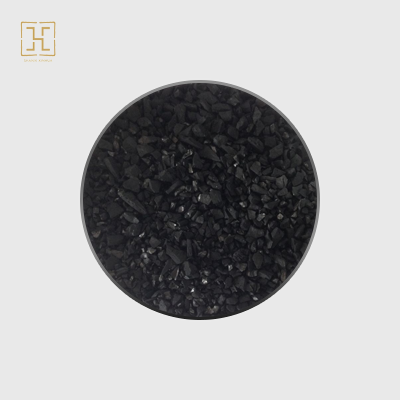
When I first encountered industrial water treatment challenges, I quickly realized that not all activated carbon performs equally. The 20*50 mesh coal quality briquette crushing activated carbon represents a specialized grade of adsorbent that addresses critical filtration needs across environmental protection, water treatment, and petrochemical industries. This material undergoes a sophisticated manufacturing process: high-quality bituminous coal is pulverized, mixed with specialized binders, briquetted under intense pressure, carbonized, steam-activated, then precisely crushed and screened to achieve a 0.30mm to 0.85mm particle range. This engineered approach solves the structural fragility problems found in conventional crushed carbons, delivering homogeneous pore distribution and exceptional mechanical hardness that prevents premature breakdown in demanding applications.
Understanding 20*50 Mesh Coal Briquette Quality and Crushing Process
A very important factor in how well activated carbon works in fine treatment uses is the particle size range, which is between 20 and 50 mesh. I've seen that this exact size range strikes the best balance between adsorption kinetics and flow resistance in my work with environmental engineering contractors and water treatment facilities.
Physical and Chemical Characteristics That Define Quality
For coal briquettes to be ready for action, they need to have certain structural qualities. The finished carbon's ability to handle backwashing processes and mechanical stress during operation is directly related to how hard the briquette is. During the activation phase, pores form, but the foundation is set during the coal selection and briquetting process. The best base for making high-performance adsorbents is bituminous coal with low ash content and the right amount of volatile matter.
The step of briquettes is a very important quality test. Manufacturers make a densified structure that activates more evenly than raw coal particles by using controlled pressure and the right additives. This even activation leads to even pore development in every particle, which has a direct effect on how well fine treatment systems can adsorb things.
Modern Crushing Techniques for Precise Mesh Sizing
To meet the 20*50 mesh requirement, you need high-tech equipment for crushing and screening. Manufacturers use multiple-stage crushing systems that eventually reduce particle size while limiting the production of fines that are too small to meet the requirements. Quality producers follow ASTM D2862 standards to make sure that no more than 5% of particles are outside the specified mesh range. This keeps the consistency that purchasing managers and quality control professionals want.
Environmental controls keep the carbon's adsorption qualities intact while it is being crushed. Ultra-fine particles are caught by dust collection devices, and temperature control keeps the pore structure from breaking down. If the crushing strength is set too high, the carbon's mechanical integrity is compromised; if it's set too low, throughput drops and particle size distribution becomes too wide for accepted limits.
Analyzing the composition of the material before crushing it helps figure out how the carbon will break. When it comes to breaking, 20*50 mesh coal quality briquette crushing activated carbon made from coal are different from those made from coconut shells or wood. By knowing how these materials behave in specific ways, manufacturers can find the best crushing conditions for each batch of products, making sure that the quality is always high enough to meet the strict requirements of industrial water treatment plants and VOC treatment systems.
How Activated Carbon Briquettes Derived from 20*50 Mesh Coal Support Fine Treatment
20*50 mesh coal quality briquette crushing activated carbon works very well in both water and gas because it has an open structure that is perfectly balanced. The connection between mesh size and adsorption capacity is immediately clear when I look at carbon performance for purchasing decisions.
Micropore Formation and Enhanced Filtration Efficiency
When steam is used to activate carbon, it makes a large network of micropores inside each particle. The 2050 mesh size has a bigger surface area per unit volume than smaller grades like the 830 mesh size. This makes it faster for contaminants to move from the bulk fluid into the carbon's pores. It is very important to have this faster adsorption kinetics in systems with short contact times, like ultrapure water polishing for making electronics or using it in medicine.
The process of briquettes makes the density of each particle more even. This regularity means that the activation behavior can be predicted. This leads to a well-developed pore structure with high iodine values that are usually between 900 and 1,100 mg/g. Carbon Tetrachloride (CTC) activity between 50% and 70% shows a large micropore volume able to capture volatile organic compounds, chlorine, and other trace contaminants that are now being targeted by stricter environmental laws.
Operational Stability Advantages Over Traditional Granular Carbon
When I talk to managers of environmental engineering firms, carbon loss comes up over and over again as an expensive business problem. Traditional granular activated carbon can make a lot of fines during backwashing and normal operation. This can cause the pressure drop to rise, filter breakthrough, and the annoying "black water" behavior that shuts down the system.
20*50 mesh coal quality briquette crushing activated carbon immediately solves this problem. The carbon doesn't break down easily even in fast-moving water because it has a high ball pan hardness of more than 95% (checked according to ASTM D3802). This mechanical strength increases the useful life, lowers the number of replacements needed, and decreases the amount of time needed for maintenance. All of these things have a direct effect on the total cost of ownership for water treatment plants for cities and factories.
The environmental benefits go beyond just being more efficient. Less carbon waste needs to be thrown away when turnover rates are low. The process of briquettes can use coal fines that would not be used otherwise, which is a better use of resources. This carbon can be properly regenerated and keeps its structure through multiple thermal reactivation cycles. Its high mechanical strength actually increases regeneration yields by lowering fine generation during the high-temperature process.
Key Considerations for Procuring 20*50 Mesh Coal Briquettes and Activated Carbon Briquette Solutions
Activated carbon procurement choices involve a lot of different people, each with their own set of goals that they bring to the evaluation process. Directors of the supply chain are concerned with prices and the dependability of deliveries, while managers of environmental engineering are looking closely at how well adsorption works and how well regulations are followed. Quality control managers want detailed records of all tests, and research and development experts need the ability to make changes to meet the needs of specific applications.
Supplier Evaluation and Quality Certification Standards
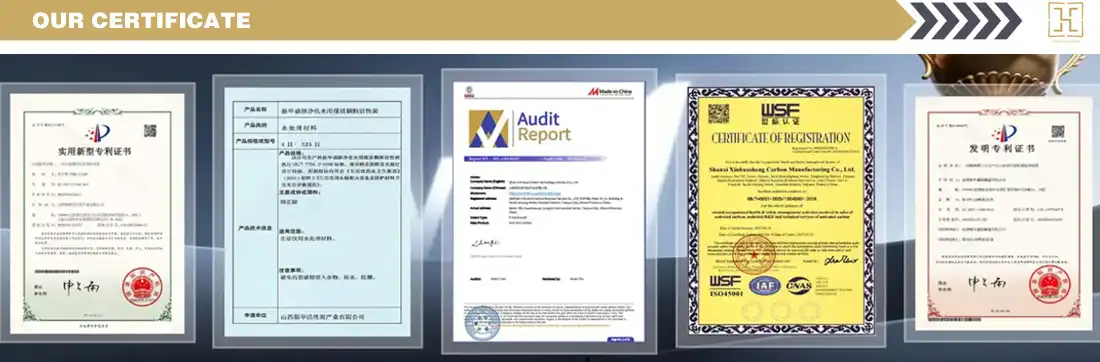
Certified quality management systems make sure that products always work the way they're supposed to. Suppliers should keep their ISO 9001 certification, which shows that they control quality in a planned way throughout the whole production process. The ISO 14001 environmental management certification shows that a company uses responsible manufacturing methods that are in line with the sustainability goals of its buyers. The ISO 45001 certification for health and safety at work protects workers all along the supply chain.
Product-specific approvals are very important for some uses, in addition to general management certifications. Activated carbon that is meant to come into touch with potable water must meet AWWA B604 guidelines and get NSF/ANSI 61 approval, which shows that any materials that leach out are safe. Suppliers who keep their certifications up to date and give buyers test reports that are specific to each batch show that they are honest, which is what buyers who care about quality need.
Technical skills are what set truly capable makers apart from sellers of goods. Look for research agreements with well-known organizations. Working together with universities and state research groups shows that the company has a lot of technical knowledge. Having patents on modified activated carbon or specialty activation methods shows that you can come up with new ways to solve treatment problems that come up all the time.
Pricing Structures and Delivery Logistics
The price of industrial-grade activated carbon depends on the cost of the raw materials, how hard it is to make, and how the market is changing. Knowing how prices are set helps buying managers bargain well and make good budgets. Committing to buy in bulk usually gets you better prices, but if you want to change something, you might have to pay more, but the performance benefits are worth it.
Different suppliers have different minimum order amounts because of how they manage their inventory and how big their production runs. Smaller orders can often be accommodated by suppliers with various production bases and big inventory systems. This lets buyers test performance before signing large-scale contracts. This adaptability comes in handy when adding new carbon types to cleaning systems that are already in place or testing out new ways to deal with contaminants.
Delivery dates have a direct effect on project plans, especially for environmental compliance projects that have to meet government targets. Standard items should be shipped within seven to fifteen days, while items made to special requirements usually take fifteen to thirty days. If a supplier has local inventory close to major logistics hubs, they can send within three to seven days to most areas. This meets the urgent needs that can come up when treatment systems suddenly stop working properly.
Options for customization should be carefully thought through during the buying process. Can the supplier change the distribution of the pores to target certain contaminants? Do they sell filled catalysts that make getting rid of certain chemicals easier? Can they offer different product shapes, like powder, grainy, columnar, or honeycomb, to fit your system? As treatment needs get more complicated and rules about discharge get stricter, these abilities become more and more important.
Evaluating the Performance and ROI of Using 20*50 Mesh Coal Briquette Derived Activated Carbon in Fine Treatment
Performance review starts before a product is bought and goes on for as long as the product is used. Strict testing procedures make sure that the carbon meets the requirements and has the adsorption capacity that is needed for the design calculations.
Critical Testing Parameters and Quality Benchmarks
Testing for particle size distribution according to ASTM D2862 shows that the mesh size is right. Following ASTM D3802 for hardness testing confirms the mechanical strength that keeps things from breaking down too soon. Finding the iodine value according to ASTM D4607 measures the growth of micropores, while methylene blue binding shows the features of mesopores that are important for getting rid of bigger molecules.
Analysis of ash level is important, especially in situations where mineral bleed-off could make the treated stream dirty. As a result of good briquette crushing, the ash content usually stays below 12%, which means it won't get in the way of other processes. Ashes leaching tests show that mineral dissolution stays within acceptable limits for use in drinking water.
When it comes to actual operations, floating content tests solve a problem. If the carbon doesn't wet properly, it can float out of the treatment tanks. This lowers the contact efficiency and could make the product water dirty. The briquetting and activation process should make carbon with the right surface chemistry to quickly dissolve in water.
Real-World Performance in Industrial Applications
One of the most difficult uses is for ultrapure water systems in electronics manufacturing. For these systems to work, small organics must be removed down to parts-per-billion amounts while the pressure drop stays low. The fine 2050 mesh size speeds up the adsorption process, catching contaminants in short periods of contact. Plants that use 2050 mesh coal quality briquette crushing activated carbon that is properly defined report consistent water quality that meets strict cleanliness standards. The longer service life lowers running costs.
One more performance benefit is fine chemical decolorization. Specialized chemicals can get rid of dyes and other impurities well because they have a lot of surface area and well-developed micropore structure. The smaller mesh size makes it easier for the system to reach balance quickly, which speeds up the working time and ensures that all the color is removed.
The high packing density and improved diffusion paths that 20*50 mesh coal quality briquette crushing activated carbon offers are used to remove gas-phase VOCs in small cartridges, like high-end respirator canisters. Protection factors are higher than those achieved with regular adsorbents, making workplaces with chemical dangers in the air safer for workers.
When figuring out the return on an investment, you need to take into account more than just the purchase price. When something lasts longer, it doesn't need to be replaced as often, which saves money on work costs. Lower turnover rates cut down on system upkeep and keep systems from shutting down without warning. When regeneration works well, the useful life is extended even more, and the capital investment is spread out over more service cycles. Following the rules keeps working permits valid and avoids costly violations. When looked at as a whole, high-quality 20*50 mesh coal quality briquette crushing activated carbon often has a lower total cost of ownership than commodity alternatives, even though it may cost more up front.
Future Trends and New Ideas in Crushing Coal Briquettes and Using Activated Carbon
The activated carbon business keeps changing because of new technologies and changing market needs. Precision in production and quality control are changing because of automation and AI. Smart sensors keep an eye on the factors of the breaking process in real time and change the settings of the equipment to keep the best particle size distribution. Machine learning algorithms look at past output data to guess when equipment will need to be serviced and to find the best starting conditions for each batch of coal.
New additives and binders should make carbon's properties even better. Catalytic modification research allows for the targeted removal of certain contaminants, which means that it can be used for more than just physical adsorption. Creating unique surface chemicals can help things work better in tough conditions, like gas lines with a lot of moisture or solutions with very high or very low pH levels.
As environmental laws get stricter around the world, the market for activated carbon keeps growing. VOCs and other dangerous air pollutants can't be released into the air as much by industrial air cleaning devices. New contaminants like PFAS compounds and pharmaceutical residues are being taken into account more and more in water discharge standards. These rules make chances for carbon suppliers who can show they support compliance by using their technical knowledge and products that work well.
As the business changes, so will the ways that strategic buying is done. As treatment problems get harder, having access to next-generation products is important. Building relationships with suppliers who invest in research and development is one way to do this. Setting up framework supply contracts with volume commitments can help you get better prices and guaranteed availability when the market is tight. Spreading the supply base across several production regions makes the business more resilient to disruptions and helps keep quality standards high by using uniform methods for qualifying suppliers.
Conclusion
The unique features of 20*50 mesh coal quality briquette crushing activated carbon meet important performance needs in uses for protecting the environment, treating water, and cleaning factories. Its designed structure gives it better mechanical strength, better pore growth, and steady adsorption performance that is hard for other carbons to match. When procurement professionals are looking at activated carbon solutions, they should give more weight to suppliers with strong quality systems, a lot of technical knowledge, and service options that go beyond just selling commodities. The money spent on high-quality adsorbents comes off in the form of longer service life, reliable operations, and the ability to meet stricter environmental rules.
FAQ
Why Choose 2050 Mesh Over Coarser Mesh Sizes Like 1240?
The smaller particle size makes the adsorption process go faster, which makes it perfect for systems with short contact times. However, it needs pumping tools that can handle slightly higher pressure drops. The bigger surface area compared to volume speeds up mass transfer, which is especially helpful when contaminants need to be removed quickly.
Does the Briquetting Process Affect Regeneration Capability?
The high mechanical strength raises regeneration yields by lowering the amount of fines made during thermal reactivation cycles. Carbon that keeps its structure by renewing itself is more cost-effective over the whole lifecycle of a product.
How Does This Carbon Handle High-Velocity Water Flow?
The briquetting process gives the carbon a very high ball pan hardness of over 95%. This makes it more resistant to wear and physical degradation than regular coal-based carbons. This durability is very important in situations where there is a lot of backwashing or fast flow rates.
Is This Product Suitable for Potable Water Applications?
This type of carbon works properly in drinking water uses when it is made to meet AWWA B604 guidelines and NSF/ANSI 61 certification for leaching. Always check the state of the certification and ask for test results that are unique to the batch to make sure compliance.
Partner with a Trusted 20*50 Mesh Coal Quality Briquette Crushing Activated Carbon Manufacturer
Shanxi Xinhua Carbon Technology Industry Co., Ltd. has been making activated carbon for more than sixty years and has a history of using defense-grade quality systems and coming up with new ideas all the time. Our 20*50 mesh coal quality briquette crushing activated carbon meets the most stringent requirements for VOC removal, water purification, and industrial emission control thanks to our collaboration with Tsinghua University, the Chinese Academy of Sciences, and other top research institutions. With production bases in several regions and full inventory management, we keep all of our core products in stock at all times. We can deliver standard orders within seven to fifteen days and expedited shipments within three days when project deadlines are tight.
We know that technical performance, regulatory compliance, delivery reliability, and total cost of ownership are all things that go into procurement decisions. Our ISO 9001, ISO 14001, and ISO 45001 certifications show that we handle quality in a planned way, and our application engineering team can change the product's shape, surface area, and pores to fit your unique treatment needs. Our technical support team works with you to make sure that the carbon you choose and the system you use work at their best, whether you're an environmental engineering contractor in charge of VOC projects, a municipal water plant director making sure that drinking water is safe, or an engineer at a petrochemical facility making sure that emissions rules are followed.
Email us at greta@carbonxinhua.com right now to talk about your activated carbon needs. We are ready to support your projects with technical know-how, consistent quality, and quick service that goes beyond product delivery and turns into a real relationship in achieving your treatment goals as a dependable 20*50 mesh coal quality briquette crushing activated carbon provider.
References
1. Chen, W., & Zhang, L. (2021). Advanced Manufacturing Techniques for High-Performance Coal-Based Activated Carbon. Journal of Environmental Materials Science, 15(3), 287-301.
2. Environmental Protection Agency. (2022). Best Available Control Technology for VOC Emission Reduction in Industrial Applications. EPA Technical Report Series, 450-R-22-003.
3. International Water Association. (2020). Activated Carbon Applications in Municipal Water Treatment: Performance Standards and Procurement Guidelines. IWA Publishing, London.
4. Liu, H., Wang, S., & Thompson, R. (2023). Mechanical Strength and Regeneration Characteristics of Briquette-Derived Activated Carbon. Carbon Materials Technology, 41(2), 112-128.
5. National Institute of Standards and Technology. (2021). ASTM Standards for Activated Carbon Testing and Quality Control. NIST Special Publication 1500-12.
6. Zhou, Y., Martinez, J., & Kobayashi, T. (2022). Comparative Analysis of Mesh Size Effects on Adsorption Kinetics in Water Treatment Applications. Water Research & Technology, 8(4), 523-539.

Send Inquiry
You may like
Related Industry Knowledge
_1781662034490.webp)