_1778553121707.webp)
How Does Food Decolorization Using Wood-Based Activated Carbon Work?
Sep 16, 2026
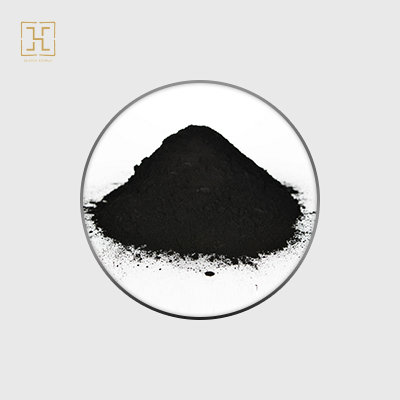
Food decolorization using wood-based activated carbon works through a physical adsorption mechanism. High-quality hardwood undergoes temperature-controlled carbonization, followed by high-temperature steam activation and precision grinding to produce a fine black powder with an extraordinarily developed microporous structure. This porous architecture — with a specific surface area reaching 1,000–1,600 m²/g — captures pigment molecules, colloids, and odor compounds directly from liquid food matrices. The process selectively removes unwanted color and impurities without altering the original flavor, aroma, or nutritional integrity of the product.
Understanding Food Decolorization Challenges in the Food Industry
One of the biggest problems with corporate food preparation is that colors don't always match up. During processing, natural colors from the raw materials, Maillard reaction byproducts, caramel compounds, and oxidation residues build up, making the food look worse and shortening its shelf life. For business-to-business buyers in the sugar refining, beverage, and condiments industries, color deviation directly means rejected batches and failure to meet safety standards.
Why Traditional Methods Fall Short
Bleach chemicals and manufactured adsorbents have been used for a long time, but they pose real risks to operations. Chemical methods are getting harder to defend because they can leave behind chemical contamination, transfer off-flavors, and create legal hurdles under FDA and EU food safety standards. Generic coal-based carbons, on the other hand, have a lot of ash and a structure that is mostly micropores, which makes it hard for them to hold onto big organic pigment molecules. This means that they can result in unnecessary sugar losses and may make it difficult to meet ICUMSA color standards. For this reason, Food decolorization using wood-based activated carbon offers a more suitable approach for businesses seeking effective color removal while aligning with increasingly strict food safety requirements around the world.
The Science Behind Wood-Based Activated Carbon in Food Decolorization
Wood-based activated carbon can remove colors because of the material it is made of and how it is activated. Premium hardwood, like sawdust, wood chips, or certain lignocellulosic biomass, is carbonized strictly at controlled temperatures and then activated by high-temperature steam. This two-step process makes a very well-organized mesoporous network (pore width 2–50 nm) that is better at catching large molecules of impurities than options built on coal.
Key Physicochemical Properties That Drive Performance
Food-grade wood-based carbon is different from industrial-grade carbon because it has a mesopore-dominant architecture. Mesopores are just the right size to hold color bodies like caramel polymers, polyphenols, and others that micropores in coal-based carbon can't. The specific surface area is between 1,000 and 1,600 m³/g, and the fact that it can adsorb up to 180 mg/g of methylene blue shows that it has great decolorizing power. Importantly, the ash level stays below 5%, and heavy metals like arsenic, lead, and mercury can't be detected using ICP-MS. This fully meets the requirements of the Food Chemicals Codex (FCC) and GB 2760.
How It Compares to Chemical Decolorization Agents
Chemical bleaching agents and carbons made from coal both have problems that wood-based carbon doesn't have. Food decolorization using wood-based activated carbon offers an alternative approach, as coal-based versions have more ash and a higher chance of trace contaminants escaping. Chemical agents leave behind waste that needs to be neutralized in more steps. Wood-based activated carbon, on the other hand, only removes impurities through physical interaction. There are no chemical reactions, secondary contaminations, or changes to the nutritional profile of the food matrix.
Benefits and Practical Applications of Wood-Based Activated Carbon in Food Processing
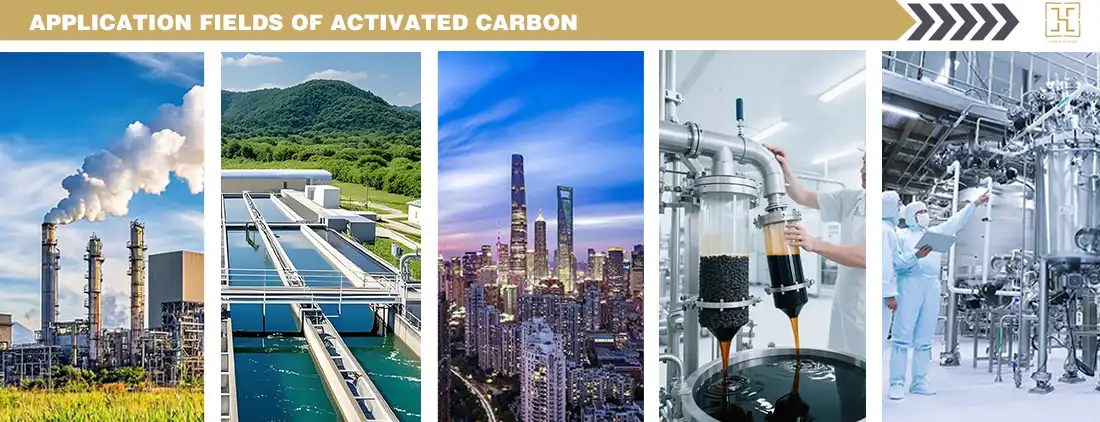
Wood-based carbon has a strong practical case in food processing based on measurable results seen in other fields. At a business level, this material has the following main performance benefits:
- Sugar Refining: When working with cane sugar, beet sugar, and rock sugar, processors usually get color values below 50 ICUMSA, with one-pass decolorization rates above 95% and sugar retention rates above 98%. This is a huge improvement over regular carbon materials, which lose more than 10% of their weight.
- Beverage and Juice Production: Fruit-glucose syrups, expensive fruit juices, and glucose syrups become clear enough for medicinal use while keeping their original taste. Manufacturers of drinks need consistent results from batch to batch, which can only be achieved with precision-manufactured activated carbon.
- Condiment Manufacturing: When making soy sauce and vinegar, focused pigment removal improves the way the food looks without changing the taste compounds that come from fermentation, which is something that chemical decolorizers always fail to do.
- Pharmaceutical and Nutraceutical Extracts: Purity and keeping active ingredients safe are important for health supplement extracts and medical syrups. Pharmaceutical-grade standards are met by wood-based powdered carbon, which keeps medicinal substances whole.
These improvements in performance directly lead to lower operational costs, a lower rate of batch rejection, and better compliance positioning. Procurement managers and production engineers can see these results right away.
Procurement Insights for Wood-Based Activated Carbon in the Food Industry
It takes more than comparing prices per ton to find the right food-grade wood-based activated carbon for large-scale operations. Professionals in procurement need to look at the product grade in relation to its intended use, the pores' size distribution in relation to the pigment molecules' goal size, and the product's certifications, such as HALAL, KOSHER, and ISO 22000 (HACCP) compliance.
What to Verify Before Purchase
Before you choose a supplier for Food decolorization using wood-based activated carbon, make sure you have proof of the following: methylene blue and caramel adsorption test results for each production batch; ICP-MS heavy metal analysis reports; particle size distribution data (200 mesh and 325 mesh are standard; custom mesh options should be available); and moisture content verification (8.0%). These factors affect how fast the filtering works in real life, how well it removes impurities, and how well it works with the processing tools you already have.
Activated carbon made from wood that is safe for food usually costs between 12,000 and 15,000 RMB per ton in China. This is a big savings compared to foreign carbon that costs over 25,000 RMB per ton. For framework contracts that cover a lot of goods, flexible MOQ arrangements and OEM private-label options give you a lot more sourcing choices.
Best Practices and Step-by-Step Guide to Using Wood-Based Activated Carbon for Food Decolorization
Process parameters play a big role in getting consistent decolorization results. Before starting any batch treatment, make sure that your activated carbon has been pre-wetted properly if your system requires it and that it has been stored in a way that has kept it sealed off from VOCs in the air. If left exposed, its large surface area will soak up smells from the air.
Critical Process Parameters
For the best performance, you need to pay attention to three variables that affect each other: dosage, contact time, and temperature. We suggest that you do a Freundlich adsorption isotherm test in your lab to find out the exact dose that is needed for your liquid matrix. Higher starting color values usually require higher carbon amounts, but using too much carbon raises the cost of the material without removing as much color. For sugar and syrup uses, the best adsorption rates are usually seen when the contact time is 20 to 40 minutes, and the temperature is 60 to 80°C. Plate-and-frame or pressure leaf filters are used for post-treatment filtering to remove spent carbon cleanly from the cleaned liquid. It is technically possible to physically regenerate spent carbon, but in food-grade applications, the material is usually only used once to avoid any risk of cross-contamination and keep the highest level of purity.
Conclusion
FAQ
Why does wood-based carbon outperform coal-based carbon for food decolorization?
The mesopore-dominant structure of wood-based carbon is just the right size to hold big organic color molecules like flavonoids and caramel. Because coal-based carbon is mostly microporous, it can't successfully catch these bigger compounds. This means that the color isn't completely removed, and more material is used per batch.
Does phosphoric acid activation affect food safety?
No, the carbon goes through a lot of washing and neutralization during production. The amount of residual phosphate is strictly controlled within the limits set by the Food Chemicals Codex (FCC). At these levels, phosphate is not harmful.
How should food-grade wood-based activated carbon be stored?
Keep it sealed in a cool, dry place away from volatile organic compounds. Its large surface area makes it easy for airborne smells to stick to it, which would make it less effective and increase the risk of contamination.
Can it be regenerated after use?
It is possible for it to grow back physically, but most places that make food use it only once. This method eliminates the risk of cross-contamination and makes sure that each batch has the highest possible adsorption capacity.
Partner with Shanxi Xinhua Carbon Technology Industry Co., Ltd. — Request Your Sample Today
Shanxi Xinhua Carbon Technology Industry Co., Ltd. is a manufacturer of food-grade, wood-based activated carbon products. They have four production bases, more than 60 years of R&D experience, and ISO 9001, 14001, and 45001 certificates. Our one-pass decolorization >95% and iodine adsorption value ≥900 mg/g give us measurable results. You can email our scientific team at greta@carbonxinhua.com or go to xhcarbontech.com to ask for a free sample or a quote for a custom formulation.
References
1. Bansal, R. C., & Goyal, M. — Activated Carbon Adsorption, CRC Press, 2005.
2. Stavropoulos, G. G., & Zabaniotou, A. A. — Fuel Processing Technology, Elsevier, 2009.
3. Dąbrowski, A. — Advances in Colloid and Interface Science, Elsevier, 2001.
4. Food Chemicals Codex (FCC), 12th Edition — United States Pharmacopeia (USP), 2020.
5. Marsh, H., & Rodríguez-Reinoso, F. — Activated Carbon, Elsevier Science, 2006.
6. Yahya, M. A., Al-Qodah, Z., & Ngah, C. W. Z. — Renewable and Sustainable Energy Reviews, Elsevier, 2015.

Send Inquiry
You may like
_1781662034490.webp)