_1778553121707.webp)
How Does Refined Wood Charcoal Improve Edible Oil Purification?
Sep 16, 2026
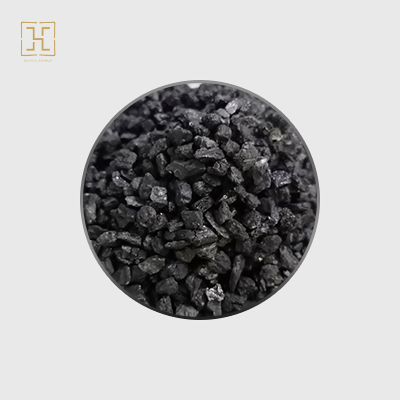
Refined wood charcoal for edible oil is a precision-engineered adsorbent that transforms crude vegetable oils into clear, stable, food-grade products. Produced from selected hardwoods through high-temperature carbonization, steam activation, and fine grinding, it develops a dense microporous architecture capable of capturing color pigments, off-flavor compounds, and trace contaminants simultaneously. Unlike broad-spectrum adsorbents, this material targets specific molecular species without disrupting the oil's fatty acid profile or natural flavor. For edible oil refineries operating under increasingly strict food safety regulations, it represents the most reliable single-step decolorization and impurity removal solution currently available.
Understanding Refined Wood Charcoal and Its Role in Edible Oil Purification
What Sets This Material Apart From Generic Adsorbents
Most people who work with edible oils have used bleaching earth or bentonite at some point. Both materials take away color, but they also remove natural vitamins and make a lot of spent-earth waste that contains oil. Refined wood charcoal for edible oil works in a different way. Its well-developed pore structure, which includes macropores, mesopores, and micropores, lets carotenoids, chlorophyll, aldehydes, and ketones stick to it while tocopherols and essential fatty acids stay mostly undisturbed. The end product is an oil that has lost its color but still has all of its nutrients.
Food-Grade Compliance as a Non-Negotiable Baseline
In the United States, the European Union, and Asia, regulators are paying more attention to how pure food oils are. When wood-based activated carbon is made under controlled carbonization conditions, it always reaches levels of arsenic, lead, and mercury that can't be found, which are important for materials that come into contact with food. Shanxi Xinhua's Refined wood charcoal for edible oil is certified by ISO 9001, ISO 14001, and ISO 45001, and before it is shipped, each batch is checked against food safety standards.
Key Benefits of Using Refined Wood Charcoal in Edible Oil Processing
When purchasing, people look at adsorbent media for processing peanut oil, soybean oil, rapeseed oil, or olive oil, people always look at three things: performance, cost, and regulatory risk. All three can be proven to work with Refined wood charcoal for edible oil.
Here are the main performance benefits that make this material better than other options:
- Superior decolorization without nutrient loss. The charcoal gets rid of over 95% of color impurities in a single contact stage. It can remove color from oil by ≥95% and iodine by ≥950 mg/g. Importantly, the controlled pH range of 5.5–7.0 stops the hydrolysis of triglycerides by acids, which keeps the quality of the oil high throughout the process.
- Odor and off-flavor elimination. The main things that cause rancidity are aldehydes and ketones that are made when lipids oxidize. The material's methylene blue adsorption value of more than 200 mg/g shows that it has a lot of mesopores, which are perfect for these medium-sized volatile compounds. After filtering, operators say that the turbidity is always less than 1 NTU.
- Trace contaminant capture. Heavy metals and pesticide residues stick to the charcoal matrix when they come into contact with it. This makes it easier for quality control testing to do its job.
These performance characteristics have a direct effect on the value in the market. When high-grade Refined wood charcoal for edible oil is used to refine oil, it always meets the color standards for premium oil, which gives processors who sell to retail and restaurant channels a better place in the market. The cost calculus is just as convincing as the performance calculus. According to Shanxi Xinhua, their Refined wood charcoal for edible oil costs between 12,000 and 18,000 CNY per ton, which is up to 40% less than foreign options while still filtering well.
The Filtration Process: How Refined Wood Charcoal Purifies Edible Oil
Operational Parameters That Determine Outcome
The Refined wood charcoal for edible oil works best when the process factors are actively controlled. Adsorption rates are affected by temperature; for vegetable oils, most users get the best results between 70°C and 90°C. When the oil matrix and the charcoal surface are stirred, they come into full contact with each other after 20 to 40 minutes. Dosage rates depend on the type of material, but for diluted, degummed oils, 0.5 to 1.5% by weight is a good place to start.
Integrating With Existing Filtration Equipment
Equipment compatibility is a real-world issue for purchase experts. Refined wood charcoal for edible oil that has been refined by Shanxi Xinhua is a fine powder that is 200–325 mesh. This particle size works with plate-and-frame filter presses, diatomaceous earth pre-coat systems, and cross-flow membrane setups without having to change any gear. Because it has a low moisture level (≤8.0%), the material flows regularly during dosing, which makes the process less likely to change from batch to batch.
A Southeast Asian soybean oil refinery reported measurable yield gains after moving from bleaching earth to wood-based Refined wood charcoal for edible oil. Specifically, the spent adsorbent held less oil, which decreased per-unit oil loss and increased batch yield overall. When processing large amounts of data, these operational gains add up to a lot.
Comparing Refined Wood Charcoal With Alternative Filtration Solutions
Bleaching earth is still the most popular way to get rid of color because it is cheap to buy. However, 20–35% of the processed oil by weight is still in the spent bleaching earth. This means that money is lost and waste needs to be thrown away. Acid-activated clays also have a risk of residual acidity that can raise the amount of free fatty acids if the contact conditions are not carefully managed.
Activated carbon made from coal has a lot of surface area, but it also has a lot of ash and heavy metals that make it hard to use in food applications. On the other hand, Refined wood charcoal for edible oil made from wood naturally makes a cleaner carbon matrix. Shanxi Xinhua's product has an ash level of no more than 3.0%. This rule directly limits the transfer of inorganic residue to the final oil.
While silica gel and manmade polymer adsorbents are good at getting rid of certain contaminants, they don't have the broad-spectrum adsorption profile needed to get rid of all contaminants, colors, and smells in a single processing step. Refined wood charcoal for edible oil is always the best option for refineries that want to simplify their processes without sacrificing compliance.
Procurement Guide: Sourcing Refined Wood Charcoal for Edible Oil Production
Evaluating Supplier Qualifications
Certification paperwork is the first thing to look for when looking for a source of Refined wood charcoal for edible oil. Verified ISO certifications, food safety compliance records, and batch-level analytical reports show that a supplier can keep product standards the same for large orders. Ask for iodine adsorption values, ash content data, and heavy metal screening results for lots that were made recently.
Supply Reliability and Delivery Planning
Large plants that process edible oils can't handle supply problems. Shanxi Xinhua has production bases in Shanxi, Ningxia, Fujian, and Xinjiang, which allow them to make 45,000 tons of products every year. Core goods are always in stock, and most orders are sent out within 7–15 days. In compliance situations where time is of the essence, an expedited green channel can deliver in as little as three days. Global multimodal transportation, which includes sea, air, and train, helps buyers from other countries keep track of their packages in real time.
Procurement teams should also evaluate the technical help a seller offers. Shanxi Xinhua works with Tsinghua University, the Chinese Academy of Sciences, and Taiyuan University of Technology. This means that clients can get application-specific advice on how to improve dosage, integrate processes, and fix quality problems. This goes far beyond just selling a product.
Conclusion
It has been shown that Refined wood charcoal for edible oil made from hardwood biomass improves the quality of edible oils in every important way: it reduces color and smell, gets rid of trace contaminants, and keeps the oils' nutrients. These products can be checked for scientific accuracy; they are safe for food, and they don't cost much more than chemical adsorbents or options that come from other countries. This material offers a combination of performance, compliance, and cost-effectiveness that few single-media options can match. It is perfect for procurement workers and process engineers who are in charge of large-scale refining operations that are under a lot of regulatory pressure.
FAQ
Is refined wood charcoal safe for use in food-grade oil processing?
Yes. When Refined wood charcoal for edible oil is made using controlled carbonization and steam activation, the levels of arsenic, lead, and mercury are always too low to be detected. The product from Shanxi Xinhua has ISO 9001, ISO 14001, and ISO 45001 certifications, and it is checked against food safety standards before every shipment.
How often should the charcoal be replaced during continuous operation?
Replacement times depend on the quality of the material, the dose rate, and the desired output. Most industrial users judge used charcoal by checking the rate of decolorization and the brightness of the oil at set times. When the decolorization efficiency falls below acceptable levels, it's time for replacement or extra dosing. During the first tests, your process engineer should set up baseline speed measures.
Can spent wood charcoal from oil refining be regenerated?
Thermal renewal is technically possible for some wood-based carbons, but because of rules about food contact, used Refined wood charcoal for edible oil is usually not allowed to be used again in the processing of edible oils. Depending on the rules in your area, most businesses treat used charcoal as a low-toxicity solid waste that can be used to make energy or manure.
What oil types is this product compatible with?
It's safe to use with peanut oil, olive oil, soybean oil, rapeseed oil, and most other refined vegetable oils.
Partner With Shanxi Xinhua Carbon Technology Industry Co., Ltd. for Your Edible Oil Purification Needs
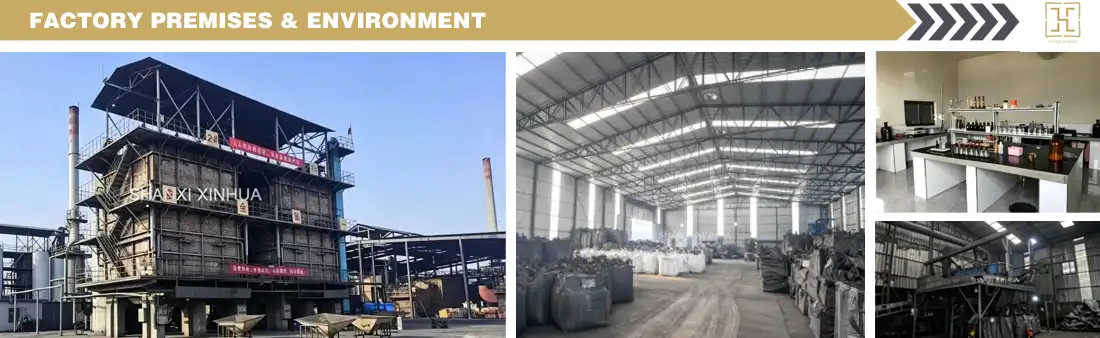
Your refinery needs a dependable maker of Refined wood charcoal for edible oil who has the technical know-how and supply capacity to handle large-scale, legally required activities. Shanxi Xinhua Carbon Technology Industry Co., Ltd. brings to every relationship more than 60 years of experience working with carbon materials, quality systems that are ISO-certified, and the ability to produce 45,000 tons of carbon every year. You can visit xhcarbontech.com or email our team directly at greta@carbonxinhua.com to get product samples, technical data sheets, or a personalized supply proposal.
References
1. Boki, K., Kubo, M., Kawasaki, N., & Mori, S. (1994). Decolorization of vegetable oils with activated carbons and attapulgite. Journal of the American Oil Chemists' Society.
2. Mag, T. K. (1995). Bleaching: Theory and Practice. AOCS Press — Edible Fats and Oils Processing.
3. Hassanein, M. M. M. (2011). Characteristics of some non-traditional oils to be considered as new sources of edible oils. Grasas y Aceites, International Journal of Fats and Oils.
4. Miyahara, M., & Nishijima, M. (2006). Occurrence of polycyclic aromatic hydrocarbons in vegetable oils and their adsorption removal by activated carbon treatment. Food Additives & Contaminants.
5. Daifas, D. P., Smith, J. P., & El-Khoury, W. (1999). Activated carbon in food processing applications: adsorption efficiency and food safety compliance. Food Research International.
6. Patterson, H. B. W. (1992). Bleaching and Purifying Fats and Oils: Theory and Practice. AOCS Press.

Send Inquiry
You may like
_1781662034490.webp)