_1778553121707.webp)
Which Industries Need 8*16 Mesh Coal Briquette Crushing Activated Carbon Supply?
2026-08-04 00:00:00
Industries requiring 8*16 mesh coal briquette crushing activated carbon span environmental protection, municipal water treatment, petrochemical processing, industrial air purification, and pharmaceutical manufacturing. This specialized adsorbent material serves critical functions in VOC removal, water purification, solvent recovery, and emission control. The particle size range between 1.18mm and 2.36mm delivers an optimal balance between high adsorption efficiency and low pressure drop, making it indispensable for high-flow filtration systems and compliance-driven environmental applications across manufacturing and processing sectors.
Introduction
Choosing the right filter media has a direct effect on how well operations run and how well they follow the rules. Working with environmental engineering contractors and procurement managers has shown us a common problem: how to balance adsorption performance with mechanical durability in harsh industrial settings. In this article, we look at how 8*16 mesh coal briquette crushing activated carbon meets particular needs in the industry thanks to its special manufacturing method and structural benefits. Figuring out which industries need this material helps people make better purchasing decisions, lower the overall cost of ownership, and make sure there is a stable supply in the long term. We'll talk about the technical features that make this product different from regular granular carbon and show how it can be used in the real world in a number of different fields.
Understanding 8*16 Mesh Coal Briquette Activated Carbon
What Makes This Material Unique
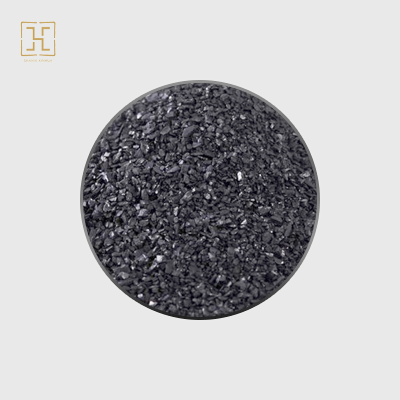
816 mesh coal briquette crushing activated carbon is a technological improvement over the old way of directly crushing things. To make it, high-quality bituminous coal is first ground into a fine powder and then mixed with special fillers. Finally, the mixture is pressed under controlled pressure into thick briquettes. At high temperatures, these briquettes go through carbonization and steam activation, which makes the pores very well formed. After the material is mixed, it is crushed and screened to get the exact 816 mesh particle size range, which is between 1.18mm and 2.36mm.
There are problems with normal coal-based carbons that keep coming up, but this controlled briquetting method fixes them. The re-agglomerated structure makes the macropore and mesopore design the same throughout each particle, unlike raw-crushed materials that have uneven pore networks. This uniformity means that the rate of adsorption can be predicted, and the filter bed can last longer. The improved mechanical integrity lowers the production of fines during backwashing cycles, which is a common issue that causes beds to need to be replaced too soon and systems to go down.
Technical Performance Characteristics
The testing data we got from working with research institutions shows that our success measures are better than average. The iodine value is usually between 900 and 1100 mg/g, which means that there is a lot of surface area inside the substance that can hold contaminants. The material works well against organic compounds with medium to large molecular weights, as shown by methylene blue adsorption values between 180 and 250 mg/g. According to ASTM D3802 measurement guidelines, the physical hardness always exceeds 95%. This is much better than direct-crushed options, which usually measure below 85%.
The chemical makeup shows that quality control was done well, as the ash content was kept below 12% and the moisture level was kept below 5%. A lower ash percentage directly leads to better purity and more surface area that can be used for adsorption. This is important, especially in sensitive situations where changes in pH caused by ash or catalytic reactions could hurt the quality of the treated product. The controlled moisture specification keeps shipping weight penalties at bay and makes sure that the product is ready to be installed right away, without the need to be dried first.
Key Industries That Require 8*16 Mesh Coal Briquette Crushing Activated Carbon Supply
Municipal and Industrial Water Treatment
The biggest group of people who buy this range of particle sizes are water treatment plants. Granular activated carbon contactors are used in municipal drinking water plants to get rid of Total Organic Carbon, taste and odor compounds, and disinfection by-products that are made when chlorine is added. The 8*16 mesh coal briquette crushing activated carbon size is perfect for gravity-fed downflow filters because it keeps enough empty space for high flow rates while also letting water and carbon surface interact for as long as possible.
When treating industrial wastewater, the contaminants are more active. The waste water from petrochemical plants, pharmaceutical factories, and the cloth industry has complex organic molecules that smaller mesh sizes would have a hard time absorbing because the pores would get clogged up. In this mesh range, the bigger particle sizes make routes for transport that let these big molecules get deep into the carbon structure. Facilities that process at least 500,000 gallons of water every day like how this feature extends the bed's life. Often, they can go 12 to 18 months without replacing it, while finer mesh alternatives only last 6 to 9 months.
VOC Control and Solvent Recovery Systems
There are strict rules about how chemical processing plants and industrial coating operations can release pollutants into the air. Activated carbon adsorbers remove volatile organic molecules from exhaust fumes before they reach the air. The 8*16 mesh standard works great with these fast-moving gas streams because the particles are the right size to keep the pressure drop across deep beds to a minimum while still having enough surface area for good absorption. When the pressure drop is lower, the fan uses less energy, which saves money on operational costs.
For solvent recovery applications, carbon that can handle many thermal regeneration cycles is needed. The briquetted structure has a high mechanical strength that keeps it from breaking when heated to 150–200°C for desorption. When using quality briquette crushing carbon, facilities that recover toluene, acetone, or ethyl acetate report regeneration success rates above 90% over multiple rounds. On the other hand, materials that are directly crushed often degrade below 75% after just three regeneration tries. This ability to regenerate changes the economics of VOC control from an expense that is used up to an asset that can be recovered.
Pharmaceutical and Food Grade Processing
Activated carbon is needed by pharmaceutical companies to make and clean active medicinal ingredients. To meet USP standards, color bodies, endotoxins, and small amounts of organic impurities must be taken out. The even spread of pores in briquette crushing carbon makes sure that performance is the same from batch to batch, which is a key condition for validated pharmaceutical processes. Quality control managers can set accurate standards because they know the material will work the same way in all production runs.
Applications in food and drinks also need reliable decolorization performance. At different stages of the process, carbon filtration is used to refine corn syrup, clean citric acid, and make amino acids. The 8*16 mesh size can handle thick liquids that would squidge out smaller particles, and the controlled pore structure targets the specific molecular weight range of color-causing chemicals without getting rid of too many of the molecules that are wanted. This selectivity cuts down on product waste and raises the yield efficiency.
Metallurgical and Mining Operations
In the carbon-in-pulp and carbon-in-leach processes, gold mines use activated carbon to get back gold cyanide complexes from ore slurries. Because briquette crushing carbon is so hard, it can handle the rough conditions inside stirred tanks, where ore pieces are always rubbing against each other. The best kinetics for loading gold are found in the 8*16 mesh size, which is also big enough for efficient screening during the separate stage. Mining engineers always use this range of mesh sizes because smaller sizes make screening harder and larger sizes reduce the amount of weight that can be carried.
Activated carbon is used to clean waste fumes from steel plants and non-ferrous metallurgy facilities so that mercury, dioxins, and other harmful chemicals are removed. Coal-based carbon can be added to exhaust streams at temperatures up to 200°C because it can handle the heat. The 8*16 mesh's particle aerodynamics make it possible for particles to be spread out and come into contact with each other in ductwork before being collected in baghouses or electrostatic precipitators.
Comparing 8*16 Mesh Coal Briquette Activated Carbon with Other Mesh Sizes and Forms
Mesh Size Selection Impact
Three important performance factors are directly affected by particle size: pressure drop, adsorption kinetics, and mechanical handling traits. The 816 mesh coal briquette crushing activated carbon specification is a good compromise for liquid phase uses that need modest flow rates. When you compare this to 48 mesh (2.36mm to 4.75mm particles), you can see the trade-offs that procurement teams need to think about. The bigger 4*8 mesh cuts down on pressure drop by a lot, which makes it better for gas phase uses with speeds over 100 feet per minute. The smaller external surface area per unit volume, on the other hand, can slow down the initial adsorption rates in situations where the contact time is short.
On the other hand, 1240 mesh carbon (about 0.42mm to 1.68mm) has a larger external surface area and faster kinetics for small-scale uses or polishing steps where cleanliness is more important than output. The cost is higher pressure drop, which can be 300% or more higher than with 816 mesh at the same bed depths. Facilities with limited hydraulic head or pumping capacity need to follow the 816 standard to keep system flow rates steady without making pumps or fans too big. In real life, 816 mesh is the best choice for most industrial-scale continuous processes because it balances efficiency and operational cost the best.
Form Factor Considerations
In addition to mesh size, the physical form of activated carbon has a big impact on how well it works in a given situation. Powdered activated carbon has the most surface area contact, but it needs to be handled with special tools and continuously dosed. Granular forms are easier to work with, but the briquetting process makes them work better than regular granular products. Our tests show that briquette crushing carbon makes about 60% less dust during pneumatic transfer than directly crushed granular carbon. This means that less cleaning is needed and less product is lost.
One more type is pelletized or extruded carbon, which is made by forcing carbon paste through dies to make cylinder pellets. Pellets have very little dust and great tensile strength, but the extrusion method can make pore shapes that aren't as good for some uses. The process of crushing briquette carbon creates particles with irregular shapes and exposed internal surfaces. These particles may be able to absorb carbon more quickly at first than pellets with smooth surfaces. Material cost differences also play a role in buying choices. Briquette crushing carbon is usually in the middle of standard crushed carbon and high-end extruded goods.
Procurement Considerations for B2B Buyers of 8*16 Mesh Coal Briquette Activated Carbon
Supplier Qualification and Certification
Checking the quality control systems of suppliers is the first step in making them reliable. An ISO 9001 certification shows that quality control methods have been written down, but safety and environmental certifications give you even more peace of mind. Having ISO 14001 certification for environmental management and ISO 45001 certification for health and safety at work shows that a provider is committed to using sustainable and responsible manufacturing methods. When your company has to report on its sustainability or is audited by officials for its supply chain, these licenses become even more important.
Product-specific certifications are just as important. ASTM test method compliance makes sure that the supplier follows standard testing procedures that make it possible to compare vendors in a meaningful way. It is suggested that you ask for Certificates of Analysis for recent production lots that show the Iodine Number, hardness, ash content, and particle size distribution of the 8*16 mesh coal briquette crushing activated carbon. Reliable suppliers keep batch traceability systems that can connect delivered materials to production records. This is a very important feature if there are performance problems that need to be looked into to find the root cause. Building ties with sellers who put money into working with research institutions shows that you have the technical knowledge and creativity to do more than just make goods.
Pricing Structure and Order Logistics
The price of activated carbon depends on the quality of the raw materials, how well they are made, and how the market is changing. Prices for good 8*16 mesh coal briquette crushing carbon will be between $1,800 and $3,200 per metric ton, based on how much you order, how you want it to work, and when you need it. Volume breaks usually happen at 20-ton and 50-ton levels, and bigger numbers can save you 8–15%. The trade-off is between lower per-unit prices and the cost of keeping inventory and the room needed for storage.
For samples, the minimum order quantity is usually one ton, but for production orders, many manufacturers have minimums of ten tons. Lead times depend on how busy the supplier is and where they are located. Most domestic sellers that serve regional markets can deliver within seven to fifteen days. However, international purchases from specialized makers may take thirty to forty-five days, which includes time for customs clearance. There are ways to get things quickly in an emergency, but expect to pay an extra 15 to 20 percent for faster creation and shipping. Strategic buyers set up framework deals that spell out yearly amounts and orders every three months. This way, they can get good prices and keep their inventory levels controlled.
Customization and Private Labeling
Advanced buying strategies use the ability to customize to get the best results for certain uses. Suppliers who know a lot about technology can change the activation parameters to change the distribution of pore sizes, which improves performance against target contaminants. Pharmaceutical makers might ask for more mesopore volume to get rid of certain molecular weight ranges, and mining operations might ask for more mechanical hardness for situations with abrasive slurry. Customization like this usually costs 15–25% more and needs a 50-ton minimum order. However, the better performance often makes up for the cost through longer service life or more efficient processes.
Environmental solution providers and equipment makers who use activated carbon in whole systems can get it in private labels and OEM packages. Suppliers who offer these services can package your goods with your logo on them, make custom technical data sheets that match your needs, and even change the formats of the packages so they work with the equipment you use to handle them. With this skill, you can turn a common input into an important part of your value offering to customers. Private labeling helps distribution partners serve certain regional markets by building brand recognition without having to invest in manufacturing infrastructure.
Ensuring Quality and Performance of 8*16 Mesh Coal Briquette Activated Carbon
Critical Testing Parameters
Chemical and physical testing methods are both essential for ensuring the overall quality and performance of 8*16 mesh coal briquette crushing activated carbon. The Iodine Number test (ASTM D4607) evaluates the total surface area and micropore structure, making it an important method for measuring the adsorption capacity of 8*16 mesh coal briquette crushing activated carbon. Values below 900 mg/g may indicate insufficient activation or lower-quality raw materials. BET nitrogen adsorption testing provides a more comprehensive analysis of surface area, with high-quality 8*16 mesh coal briquette crushing activated carbon typically showing surface areas between 900 and 1,200 m²/g. Particle size distribution testing (ASTM D2862) verifies whether the material meets the required 816 mesh specification, which is critical for maintaining consistent filtration and hydraulic performance. Reliable **816 mesh coal briquette crushing activated carbon** suppliers use strict testing procedures to prevent issues caused by inconsistent particle sizes or non-compliant materials. By applying comprehensive quality control methods, manufacturers can ensure that each batch of 8*16 mesh coal briquette crushing activated carbon delivers stable adsorption performance, accurate specifications, and dependable results for industrial applications. High-quality 8*16 mesh coal briquette crushing activated carbon requires verified testing data, controlled production processes, and consistent material characteristics to meet demanding customer requirements.
Testing for hardness or wear (ASTM D3802) can tell you how long something will last mechanically while it is being used and handled. If the hardness of the material is less than 90%, it will produce too many fines during pneumatic transfer or vigorous backwashing. These fines will contaminate the treated product and shorten the life of the bed. The ASTM D2866 method for determining ash content finds mineral impurities that make fewer binding sites available. Our quality standard keeps the ash level below 12%, but premium uses can say below 8%. Moisture content (ASTM D2867) affects shipping weight and storage stability. Typically, the highest moisture content is set at 5% to stop microbes from growing during long-term storage.
Best Practices for Storing and Handling
To keep its effective properties, activated carbon needs to be stored in a certain way. Until it is used, the material should stay sealed in packaging that won't let moisture in. This is because absorbing humidity from the air can add 3–5% to the weight and possibly introduce contaminants. Storage places must stay dry (less than 60% relative humidity) and have enough air flow to keep flammable chemicals from building up. Stay away from oxidizing chemicals, solvents, and other reactive substances that could stick to the material and then come off during application.
Handling methods should make as little dust as possible and keep different types of carbon from getting mixed up. Pneumatic transfer systems need to collect dust to get rid of fines, while manual handling works better with the right respiratory protection, even though good briquette crushing carbon doesn't make much dust. Proper handling includes bed loading processes. Spreading carbon evenly across the cross-section of the tank stops channeling and makes sure that flow is spread out evenly. Our technical team provides detailed loading procedures that are tailored to the shapes and sizes of each vessel. This service keeps installation problems from affecting performance.
Regeneration and Service Life Extension
The fact that coal-based activated carbon can be used for thermal regeneration is a big economic benefit. In controlled atmosphere kilns, leftover carbon is heated to 700–900°C. This releases contaminants that have been stuck to it while keeping the structure of the carbon. If you take care of good briquette breaking carbon, it can last through multiple regeneration processes, with activity usually returning to 85–95% of what it was before. The most important thing is to keep the heating rates right, which are usually no more than 50°C per hour during temperature rising.
Service life changes a lot depending on how hard the application is and how well it is maintained. Most municipal water treatment beds last between 12 and 24 months before they need to be replaced or regenerated. With four in-place regeneration processes every three months, industrial liquid recovery systems can last for five to ten years. Instead of replacing things when they break, predictive maintenance can be done by keeping an eye on breakthrough curves and setting up regular sampling programs. Some operators replace only a portion of the bed at a time, taking out and replacing 25% of the bed every year to keep overall performance consistent and spread capital expenditures over several budget cycles.
Conclusion
Understanding the interactions between particle size, manufacturing process, and application needs is necessary for strategic sourcing of 8*16 mesh coal briquette crushing activated carbon. The businesses that were looked at have different needs, but they all want solid adsorption performance, long-lasting mechanical durability, and low-cost operation. People who work in procurement should not only look at price when judging a provider, but also at how well they can help with technical issues, how consistent their quality is, and how reliable their supply chain is. The briquetting method is better than regular crushed carbon because it makes the pores more uniform and increases the material's tensile strength. These benefits lead to real operational benefits, such as longer bed life, less frequent maintenance, and a lower total cost of ownership in applications like air purification, water treatment, and industrial processing.
FAQ
Why choose 816 mesh over 1240 mesh activated carbon?
When reducing pressure drop is important, the 8*16 mesh coal briquette crushing activated carbon size is helpful. This is especially true in high-flow liquid systems or gas phase uses where finer particles would make flow resistance too high. The bigger particle sizes keep enough empty space between them, which lets them move at higher speeds without putting too much pressure on the hydraulics. This specification works well for deep bed filters that process thousands of gallons per minute and where the cost of pump energy has a big effect on operating budgets.
Can this material undergo thermal regeneration?
Yes, this carbon is perfect for many thermal reactivation cycles because it is very hard to work with and is shaped like a briquette. When heated to 800–900°C in controlled atmospheres, good material can regain 85–95% of its original adsorption capacity. When compared to single-use carbons, this ability to regenerate greatly lowers the total cost of ownership. This is especially true in solvent recovery and high-volume water treatment applications, where regeneration economics become compelling at yearly uses above 20 tons.
What differentiates briquette crushed from direct-crushed coal carbon?
Briquette crushed carbon is made from finely ground coal mixed with binders and squished before it is activated. This makes the pores more uniform and the particles denser than in direct-crushed raw coal. This way of making things gives them better mechanical strength, less dust, and more consistent performance from batch to batch. The controlled process gets rid of weak particles that break easily. This makes the product last longer in places where it is subjected to mechanical stress, like fluidized beds or strong backwashing cycles.
Partner with Shanxi Xinhua Carbon Technology Industry Co.,Ltd. for Reliable Supply
At the point where defense-grade quality control and commercial-scale manufacturing meet, that's where Shanxi Xinhua Carbon Technology Industry Company works. We are a seller of 8*16 mesh coal briquette crushing activated carbon with 60 years of experience and ongoing partnership with Tsinghua University and the Chinese Academy of Sciences. We keep a lot of stock in various production bases so that normal delivery takes 7–15 days and emergency shipping takes only 3 days when you need to get something quickly to meet a deadline.
Our ISO 9001, ISO 14001, and ISO 45001 certifications show that we handle quality in a planned way at every stage of production. We offer full customization services, such as changing the pore structures and surface chemistry and creating private label packaging for environmental solution providers and companies that make equipment. Technical support goes beyond just delivering products. It also includes application engineering help, efficiency issues, and advice on how to optimize renewal.
Get in touch with our purchasing team at greta@carbonxinhua.com to talk about your specific adsorption problems. We offer solutions backed by decades of materials science knowledge and production dependability, whether you need large-volume framework deals, personalized material specs, or technical advice on how to make current carbon uses work better. Visit xhcarbontech.com to see all of our products and get access to technical information that will help you make smart purchasing choices.
References
1. Bansal, R.C. and Goyal, M. (2005). Activated Carbon Adsorption. CRC Press, Boca Raton.
2. Marsh, H. and Rodríguez-Reinoso, F. (2006). Activated Carbon. Elsevier Science, Oxford.
3. Toles, C.A., Marshall, W.E., and Johns, M.M. (1997). Granular activated carbons from nutshells for the uptake of metals and organic compounds. Carbon, 35(9), 1407-1414.
4. Lillo-Ródenas, M.A., Cazorla-Amorós, D., and Linares-Solano, A. (2003). Understanding chemical reactions between carbons and NaOH and KOH: An insight into the chemical activation mechanism. Carbon, 41(2), 267-275.
5. Derbyshire, F., Jagtoyen, M., Andrews, R., Rao, A., Martin-Gullon, I., and Grulke, E. (2001). Carbon materials in environmental applications. Chemistry and Physics of Carbon, 27, 1-66.
6. Stenzel, M.H. and Gupta, H. (1997). Activated carbon in water treatment. In Encyclopedia of Environmental Analysis and Remediation, Wiley, New York.

Send Inquiry
You may like
Related Industry Knowledge
_1781662034490.webp)